
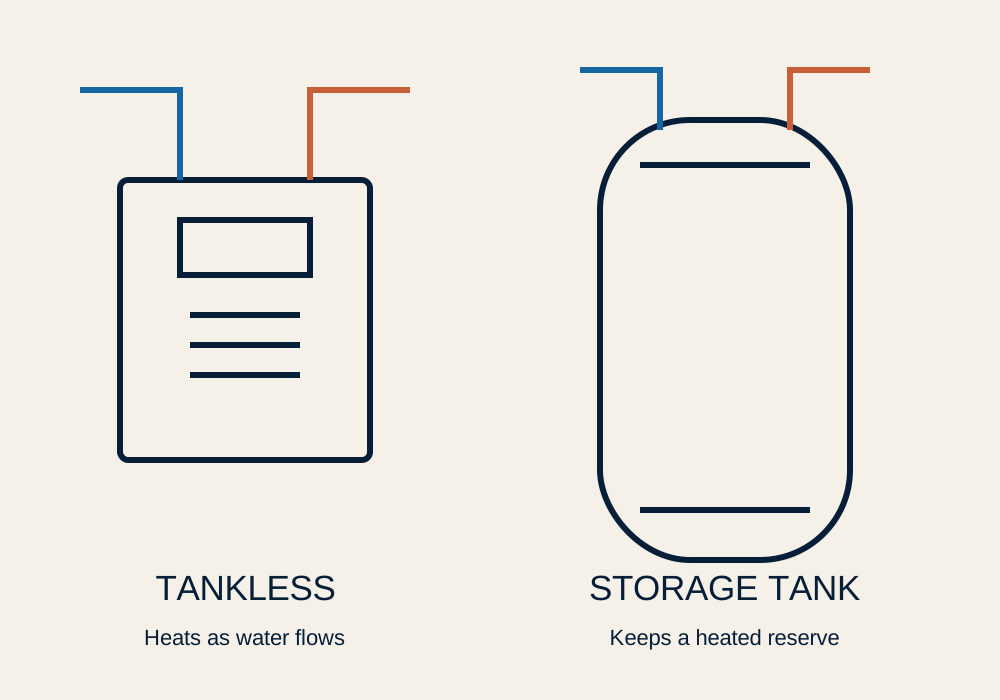
I have reservations about tankless water heaters, though I have specified them in certain situations. Before choosing a system, it’s important to understand the advantages and drawbacks of tankless units compared with traditional storage-tank water heaters.
Tankless systems can use less energy because they heat water on demand. But “tankless” does not mean “instant hot water.” A fixture may receive hot water quickly if it’s close to the heater, but the water still has to travel through the pipes.
Marketing often highlights potential energy savings without fully explaining the costs, performance limits, and maintenance requirements. Whether you are planning a new home or replacing a heater in an existing home, look at the whole system before choosing the equipment.
Tankless water heaters
Purchase and installation costs
Traditional tank water heaters are relatively straightforward to install and are usually less expensive upfront. As a general budgeting example, replacing a 50-gallon water heater might cost $1,200 to $2,500, depending on the unit and installation requirements.
A tankless installation might cost $1,500 to $4,200, with more involved installations reaching $7,250 or more. These figures are illustrative planning examples, not current Arizona price quotes. Get written local estimates for the specific equipment and work your home needs.
Costs vary with fuel type, equipment, labor, and upgrades to plumbing, gas lines, electrical service, or venting. A simple replacement and a conversion from a tank to tankless are different jobs. Ask whether permits, removal of the old unit, and any required upgrades are included.
Tankless units may cost less to operate, but higher purchase and installation costs can take years to recoup. Payback depends on hot-water use, utility rates, installation, and maintenance. ENERGY STAR explains the efficiency benefits of certified gas tankless heaters, but energy savings alone do not tell you the total cost of ownership.
Repairs may require a technician familiar with the specific brand. Check local service availability and the manufacturer’s warranty terms before purchasing. Ask what maintenance records you need to keep and which conditions or service practices could affect coverage.
Flow-rate limitations
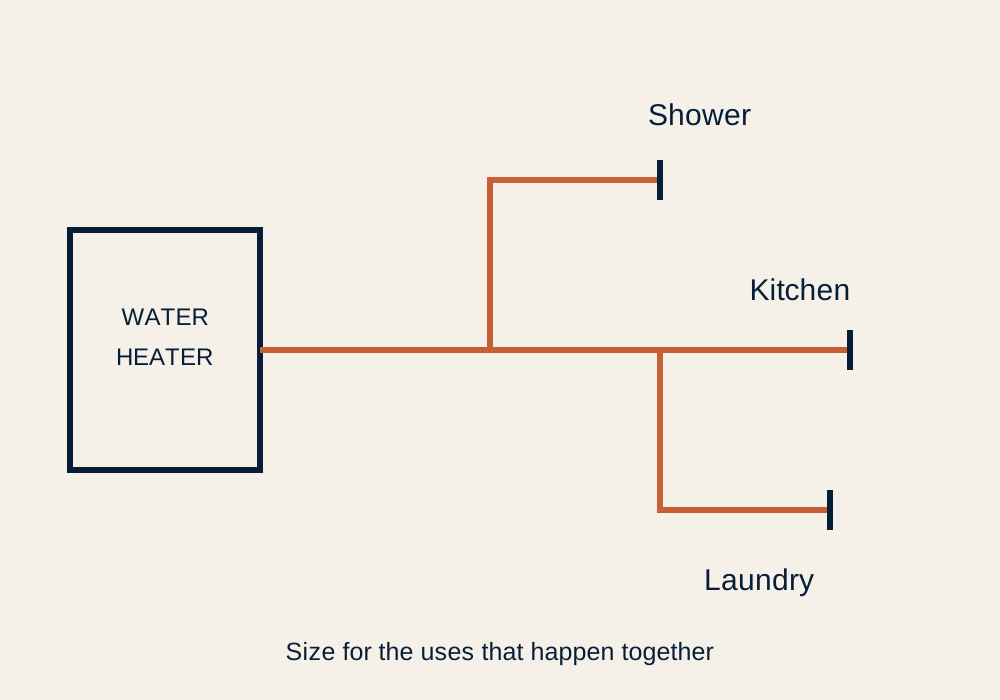
A tankless heater can only heat water at the rate its capacity allows. If several fixtures or appliances need hot water at once, an undersized unit may not keep up.
As a broad illustration, some gas units supply about 5 to 10 gallons per minute (GPM), while some electric units supply about 2 to 5 GPM. Those are not guaranteed outputs or sizing rules. Actual performance depends on the model and the temperature rise needed, and equipment can fall outside those ranges.
A showerhead rated at 2.5 GPM can use that much total mixed water, not necessarily that much hot water from the heater. Add another shower, dishwasher, or washing machine, and simultaneous hot-water demand can exceed a smaller unit’s capacity. Depending on the equipment, excessive demand can reduce flow or prevent the desired temperature from being maintained.
Incoming water temperature matters
Groundwater temperature varies by region and season. Colder incoming water takes more energy to reach the desired temperature. A tankless heater’s available flow can fall as the required temperature rise increases.
For example, raising incoming water from 60°F to 120°F requires a 60°F temperature rise. Starting at 40°F requires an 80°F rise. Have the installer use the selected model’s performance chart at the home’s design conditions, rather than a headline maximum GPM rating.
A storage-tank heater also has to heat cold incoming water, but it keeps a reserve available. A well-insulated tank retains heat, although standby losses vary by model and conditions. The Department of Energy’s sizing resource emphasizes household usage, peak demand, and heater type when choosing capacity.
What happens during a power outage?
A gas-fired tankless heater typically needs electricity for ignition, controls, sensors, and, on many models, an exhaust fan. Without an appropriate backup, it generally will not operate during a power outage.
A storage-tank heater may still have hot water available for a time. Whether it can reheat during an outage depends on its design and fuel supply. Electric tanks and gas models with powered controls or venting generally need electricity; some conventional standing-pilot gas tanks do not. Confirm the specific model’s requirements.
Maintenance and repair costs
Conventional tank-style heaters have relatively familiar components: an insulated tank, a heat source, and controls. When a tank fails, replacement is often straightforward. Tankless systems have additional components that may make diagnosis and repair more specialized.
For budgeting discussion only, a heat-exchanger repair might run $600 to $1,500, while a sensor or thermostat repair might run $175 to $500. Actual costs can differ substantially with the model, parts, warranty, labor, and cause of the problem. Get a diagnosis and an estimate before deciding whether to repair or replace.
Hard water can cause mineral buildup. Follow the manufacturer’s instructions and local water conditions when setting a descaling schedule. Ask your installer what water treatment, service access, and maintenance the selected model requires. Neither type of heater should be treated as maintenance-free.
Placement and distance to fixtures
When a client asks about tankless, I consider the number of occupants, simultaneous demand, and possible heater locations. The system must suit the household, including combinations such as a shower and dishwasher operating together.
Distance from the heater affects how long hot water takes to arrive and how much heat is lost along the way. To reduce delays and heat loss:
- Place the heater near the fixtures with the greatest demand when practical, while respecting installation and service requirements.
- Insulate hot-water pipes.
- Consider a properly designed recirculation system if long waits are a concern.
A recirculation pump can improve convenience, but it can add energy use. Appropriate controls and insulated piping help limit that use. A retrofit might be discussed around a $500 starting example, but system design and site conditions can change the price considerably. Ask for a quote, and confirm compatibility with the chosen heater.
Large fixtures, such as garden tubs and whirlpool baths, may need substantial hot-water volume. Include their actual capacity and desired fill rate when sizing either system.
Traditional storage-tank water heaters
Lower upfront cost and simpler replacement
Storage-tank heaters are generally less expensive to purchase and install than tankless systems. A like-for-like replacement may also avoid some of the plumbing, gas-line, electrical, or venting upgrades needed for a conversion. Existing installations still need to be checked for current requirements and safe operation.
Tank-style units are familiar to many installers. Requirements vary, but replacement is often less complex than a tankless conversion. Confirm the replacement unit fits the available space and allows safe access for future maintenance.
A stored supply of hot water
A tank keeps a reserve that can support several simultaneous uses. That supply is finite and can run out during high or sustained demand. Match both tank size and recovery rate to the household, and ask the installer about the first-hour rating, which accounts for stored water and reheating capacity.
Storage heaters use energy to keep water warm. Operating costs depend on fuel, insulation, equipment efficiency, household use, and utility rates. This discussion focuses on conventional storage tanks; a heat-pump water heater is another tank-based option worth asking about, with different space, airflow, and operating requirements.
Familiar technology still needs maintenance
Storage tanks need attention too. A. O. Smith’s maintenance guidance covers sediment removal, anode inspection, and temperature-and-pressure relief valve checks. Use your own heater’s manual and a qualified professional to set the right schedule.
- Tank flushing: Many models call for annual sediment removal, with more frequent attention in hard-water conditions. Follow the manual and safe shutdown procedures.
- Anode rod: Inspect at the manufacturer’s interval and replace when needed. Its condition depends on water quality and use; do not assume every rod lasts two or three years.
- Temperature-and-pressure relief valve: Have it checked as instructed. Discharge can cause severe burns. A dripping valve needs diagnosis, including pressure or thermal-expansion problems. Never cap or plug it.
- Temperature settings: A 120°F setting is commonly used to reduce energy use and scald risk, but it does not eliminate burn risk. Have a professional confirm settings, mixing valves, and any household-specific health needs. Follow model instructions for vacation mode.
If you are unfamiliar with hot water, pressure, gas, or electrical equipment, arrange professional service rather than attempting maintenance from a general article.
Making the right choice
There is no single best option for every home. Compare purchase, installation, energy, maintenance, and repair costs, rather than equipment price or advertised efficiency alone.
Tankless may suit you when
You need a compact unit, want sustained hot water within its flow capacity, can accommodate the installation requirements, and have dependable service for the brand.
A storage tank may suit you when
You want a simpler replacement, a lower initial cost, and a stored reserve sized for your household, with room for the tank and access for maintenance.
Before choosing, consider:
- How many people live in the home.
- How often fixtures need hot water at the same time.
- Incoming water temperature and local water quality.
- Distance between the heater and fixtures.
- High-demand fixtures, including large tubs.
- Installation requirements, warranty terms, and local service options.
A qualified installer can assess those factors and recommend a system sized for actual demand. Ask for comparable proposals that explain the equipment, required upgrades, ongoing service, and expected performance.
Plan the space before choosing the equipment
For a new home or remodel, raise the water-heater question early in the residential design process. Heater location, service clearance, and the relationship between kitchens, baths, and laundry areas can affect both comfort and the plan.
All-Pro Home Services provides residential design and drafting. Your qualified installer confirms the equipment sizing, utility needs, and installation details. If you are planning a home or addition, start a planning conversation so those questions can be considered before the layout is settled.
Frequently asked questions
Does a tankless water heater give instant hot water?
No. It heats water on demand, but water still has to travel through the pipes to the fixture. Heater location, pipe length, insulation, and a properly controlled recirculation system affect the wait.
Which system is better when several fixtures run at once?
Either can work when properly sized. Tankless systems must meet simultaneous flow demand at the required temperature rise. Storage tanks need enough stored capacity and recovery rate for the household's peak use.
Is tankless always cheaper over the life of the system?
No. Compare installation, utility use, maintenance, and repair costs. A lower energy bill does not automatically recover a higher installation price.
Should I choose a system before planning a new home or addition?
Discuss it early. Space, service access, pipe routes, gas or electrical capacity, and venting can affect the home plan. Have a qualified installer confirm the equipment sizing and installation requirements.
Related reading

How to Choose House Plans for Your Arizona Property
A practical guide to choosing house plans around your lot, daily routines, budget priorities, and the details needed before construction.
Read the guide →